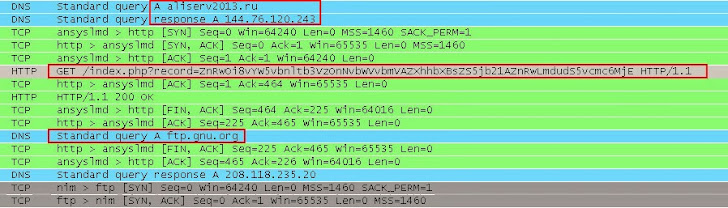
First Android bootkit malware found on over 350,000 mobile devices:
A new trojan for Android has been discovered that resides in
the memory of infected devices and launches itself early on in the OS
loading stage. Even if some elements of the threat are removed
successfully, at least one component will still reside in the protected
memory area and will reinstall the malware after a reboot and, thus,
re-infect the system.
The threat, detected as “
Android.Oldboot.1” by Russian security firm Doctor Web, is believed to be the first bootkit for Android
according to the company.
A bootkit, for those who don’t know, is a kernel-mode rootkit variant
that can infect startup code in order to attack even attack full disk
encryption systems as well as minimize the possibility that it will be
deleted without tampering with the device’s file system.
The malware has reportedly been detected on more than 350,000 mobile
devices around the world, including Spain, Italy, Germany, Russia,
Brazil, the US and some Southeast Asian countries. 92 percent of the
compromised devices are, however, located in China:
This is key to understanding that this threat doesn’t spread by
simply browsing the Web, opening attachments, or even sideloading
suspicious apps. The malware either ships with the device in question or
is manually deployed by someone with physical access to an Android
phone or tablet.
Doctor Web explains a device is first infected by placing one of
trojan’s components into the boot partition of the file system and by
modifying the init script responsible for the initialisation of OS
components. When the device is turned on, the modified script loads the
code responsible for the trojan’s Linux-library imei_chk, which extracts
the files libgooglekernel.so and GoogleKernel.apk, placing them in
/system/lib and /system/app, respectively.
Thus, part of the Trojan Android.Oldboot is installed as a typical
application which further functions as a system service and uses the
libgooglekernel.so library to connect to a remote server and receive
various commands, most notably, to download, install or remove certain
applications. Reflashing a device with modified firmware that contains
the routines required for the trojan’s operation is the most likely way
this threat is introduced, according to Doctor Web.
The good news is that your device is unlikely to be infected with
Android.Oldboot.1 unless you have purchased a dubious product from a
Chinese manufacturer. On the flipside, this sets a dangerous precedent
for Android malware that is very difficult to remove.
Full list of infected applications published by “Myournet”:
- Falling Down
- Super Guitar Solo
- Super History Eraser
- Photo Editor
- Super Ringtone Maker
- Super Sex Positions
- Hot Sexy Videos
- Chess
- 下坠滚球_Falldown
- Hilton Sex Sound
- Screaming Sexy Japanese Girls
- Falling Ball Dodge
- Scientific Calculator
- Dice Roller
- 躲避弹球
- Advanced Currency Converter
- App Uninstaller
- 几何战机_PewPew
- Funny Paint
- Spider Man
- 蜘蛛侠
Full list of infected applications published by “Kingmall2010″:
- Bowling Time
- Advanced Barcode Scanner
- Supre Bluetooth Transfer
- Task Killer Pro
- Music Box
- Sexy Girls: Japanese
- Sexy Legs
- Advanced File Manager
- Magic Strobe Light
- 致命绝色美腿
- 墨水坦克Panzer Panic
- 裸奔先生Mr. Runner
- 软件强力卸载
- Advanced App to SD
- Super Stopwatch & Timer
- Advanced Compass Leveler
- Best password safe
- 掷骰子
- 多彩绘画
Full list of infected apps under the developer name “we20090202″:
- Finger Race
- Piano
- Bubble Shoot
- Advanced Sound Manager
- Magic Hypnotic Spiral
- Funny Face
- Color Blindness Test
- Tie a Tie
- Quick Notes
- Basketball Shot Now
- Quick Delete Contacts
- Omok Five in a Row
- Super Sexy Ringtones
- 大家来找茬
- 桌上曲棍球
- 投篮高手